

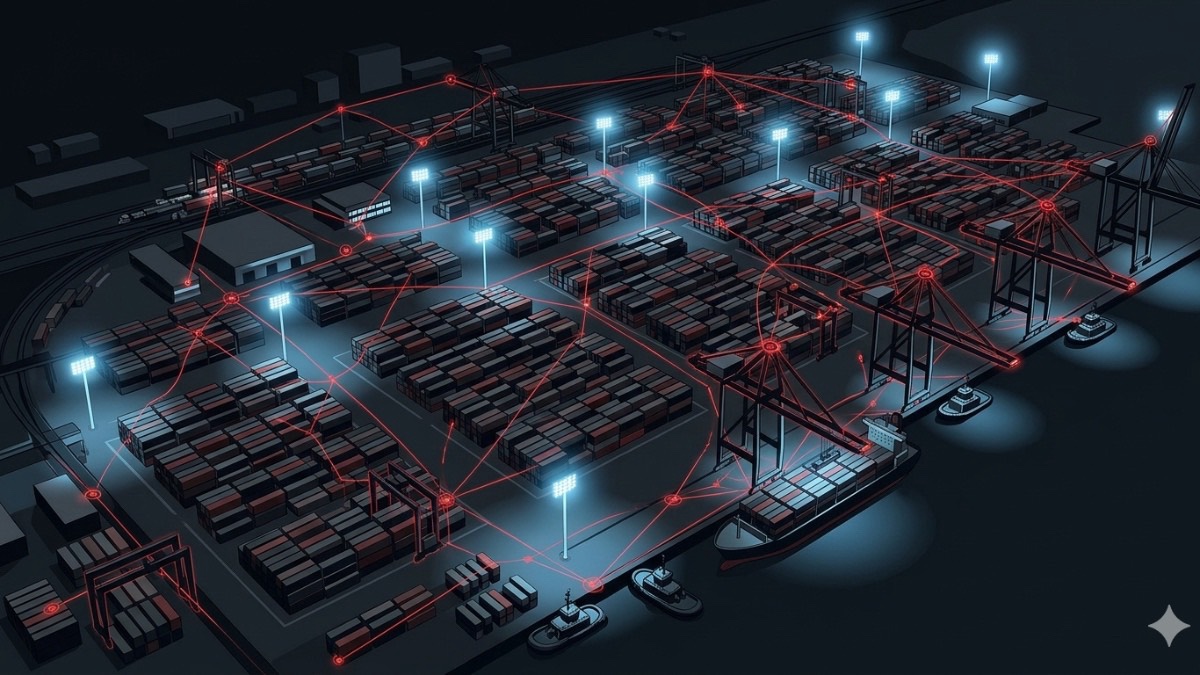
More than two-thirds of transportation and logistics organisations globally expect to be fully digital within two years — up from fewer than 5% today — but the same connectivity driving that transformation is dramatically expanding their exposure to cyberattacks, according to a joint study by Kaspersky and VDC Research.
The report, Driving Cyber Resilience Across Transportation and Logistics, surveyed operators across the sector and found that cybersecurity concerns are the single biggest barrier to digital adoption, cited by 36% of respondents. Stakeholder coordination gaps (28%) and shortages of skilled staff and budget (26% each) round out the top obstacles.
The Operational Reality of OT Cybersecurity Failures
The financial and operational consequences of inadequate cybersecurity in the sector are concrete. According to the study, 68% of respondents reported measurable financial impact from cybersecurity incidents. More than 40% estimated damages exceeding US$1 million per incident. The average operational interruption caused by a cyber incident ran to nearly 12 hours — a figure that translates into cascading disruption across interconnected freight networks, with recovery windows that can stretch for days.
Keeping operational technology (OT) systems and devices patched emerged as the top security challenge, cited by 48% of respondents. A shortage of personnel with OT security knowledge was identified by 36%.
The governance gap compounds the problem. OT cybersecurity policy management remains primarily the domain of IT teams — 54% IT-led versus 12% OT-led — despite IT and OT teams operating with fundamentally different priorities. Operations teams focus on safety, punctuality and throughput; IT teams on confidentiality, integrity and availability. When those functions lack a shared risk language, patching schedules, segmentation decisions and remote access governance stall.
Building Cyber Resilience in an Always-On Sector
The report identifies cyber resilience itself as a top driver of digitalisation investment, cited by 27% of respondents — second only to improving throughput and network efficiency (31%). The finding signals that operators no longer view security as a constraint on transformation, but as a prerequisite for it.
Kaspersky recommends three approaches: managing cyber-physical systems security as part of enterprise risk and resilience planning rather than delegating it to IT; designing protection around uptime and OT-aware detection rather than conventional anomaly thresholds; and partnering with providers that can deliver consistent, site-wide deployment. Service and support capability and total cost of ownership were cited as the top vendor selection factors by 58% of respondents each.
At the centre of Kaspersky’s recommended approach is its Industrial CyberSecurity (KICS) platform, a native XDR solution built for critical infrastructure that combines OT network visibility with endpoint protection and detection.


Share your thoughts