

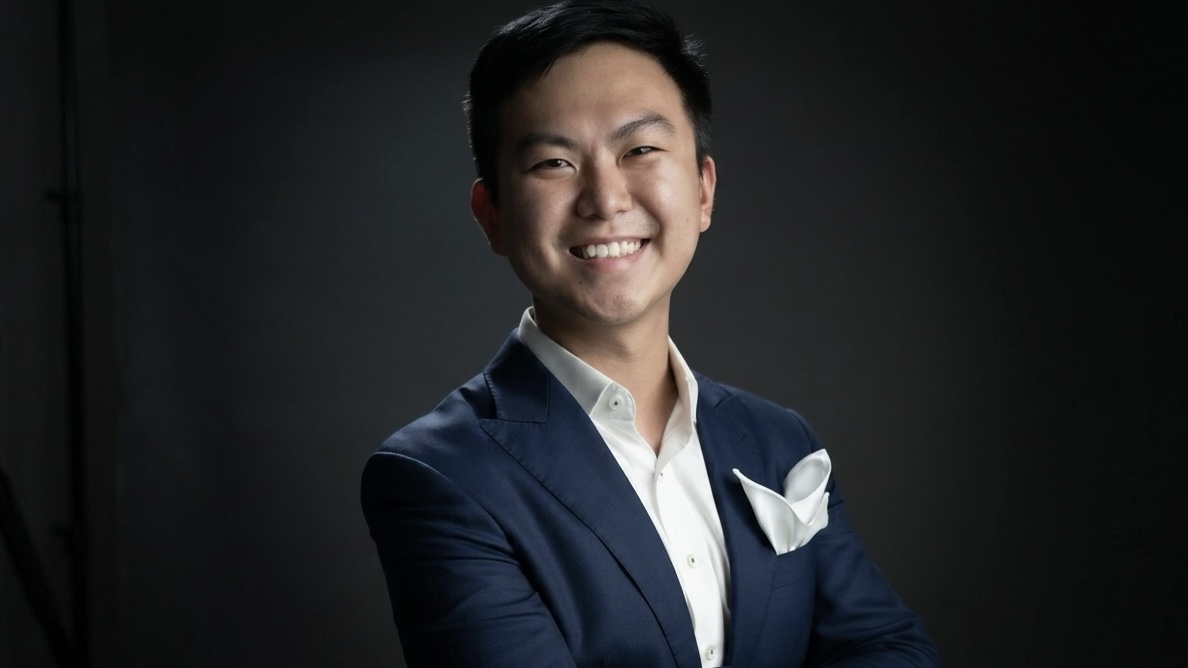
GoRental founder and CEO Colin Peh started the company in 2017, when battery-powered alternatives to diesel generators were still a fringe idea. Eight years on, GoRental has deployed clean energy systems at Singapore’s National Day Parade, Formula 1, healthcare sites and flood-hit communities in Thailand. In this feature, Colin reflects on the tensions of building a mission-driven business, GoRental’s regional expansion and what it takes to hold your line when the market isn’t ready.
Spotting the problem before the conversation started
Colin did not come to clean energy through policy or trends. His background was in production and technical support, where diesel generators were simply the default — noisy, costly and largely unquestioned.
“What struck me was that nobody was really questioning the system,” he said. “People would complain about the noise, the fumes, the fuel cost, the maintenance, but they still treated it as unavoidable.”
The more he studied battery technology and energy storage, the more convinced he became that the shift was not just incremental. “If you wait until everyone agrees, you are already late,” he said.
What clean energy deployment actually looks like

Behind the polished lights of an NDP or Formula 1 event lies a detailed technical operation. Colin says GoRental begins every deployment with a careful assessment of load profiles, peak demand, redundancy requirements and site constraints — before any equipment is selected.
“Instead of just dropping in a generator and burning fuel all day, we can tailor the deployment more intelligently,” he said. At high-stakes events, reliability is non-negotiable, which means teams spend considerable time on planning, testing and live monitoring.
Colin is also direct about the commercial case for clean energy. “What people often miss is that clean energy in these environments is not just about sustainability. It is also about control, quiet operation, lower maintenance and smarter deployment.”
Building the ecosystem, not just the product
GoRental has recently expanded its scope through two new initiatives: CETRIC, launched with the Singapore Battery Consortium, and GoRental Technology, a financing arm designed to lower the barrier to adoption.
Colin says the financing arm addresses a gap he has observed consistently across markets. “In many cases, businesses or operators understand the value of cleaner distributed power, but the upfront cost still becomes a barrier. If you want real adoption, you cannot only solve for technology. You also have to solve for access.”
He believes the timing is right. “The conversation is no longer just ‘does this work?’ It is now ‘how do we scale this properly?’”
Where Southeast Asia is moving — and where it isn’t
Across Southeast Asia, Colin sees momentum in markets where energy pain is tangible — high fuel costs, weak grid infrastructure, remote operations. But resistance remains strong where diesel is deeply embedded in operational culture.
“If clean energy is framed only as a moral issue, some markets disengage,” he said. “But when it is framed around reliability, cost savings, lower maintenance and long-term control, the conversation changes.”
From events to emergency response

GoRental’s work in Chiang Mai — deploying battery and solar systems to communities affected by flooding — expanded the company’s sense of what distributed energy could mean beyond commercial deployments.
“Energy is never just infrastructure,” Colin said. “When a community loses reliable access to power, everything becomes harder very quickly. Safety, communication, household routines, even morale.”
He noted that community deployments require more than technical capability. “You have to work with the community respectfully, understand the local context, and make sure what you are bringing is genuinely useful.”
Building substance before visibility
Despite operating at national scale, GoRental has remained largely out of the spotlight — a posture Peh says was partly deliberate. In the early years, he prioritised capability over brand-building, entering markets where performance mattered more than visibility.
“We did not want to overstate ourselves before the work could speak for itself,” he said. But he acknowledges the calculus is changing. “If you want to influence adoption, build partnerships, shape policy conversations or help more communities, people need to understand what you are doing.”
Holding the line when the market isn’t ready
The hardest tension Colin faced was the gap between where GoRental could see the industry heading and where customers actually were. With diesel still the familiar default, the commercial pressure to compromise was real.
“There were moments where the commercial path would have been easier if we just stayed closer to the old model,” he said. “But if we had done that, we would have built a more convenient business, not the right one.”
He says that tension ultimately sharpened the company’s thinking — both on what it stood for and on how to translate mission into practical business value.
Advice for founders sitting on an idea
Colin’s parting message for founders who have not yet acted is direct: start before you feel ready.
“Certainty usually comes after action, not before it,” he said. But he adds a second condition that he considers equally important. “Do not build only around excitement. Build around endurance. There will be periods when the market does not understand you, when progress feels slow, when the mission and the business seem to pull in different directions. That is normal.”
His closing thought is a challenge as much as an encouragement. “The market may catch up later, but only if you are still there when it does.”


Share your thoughts