

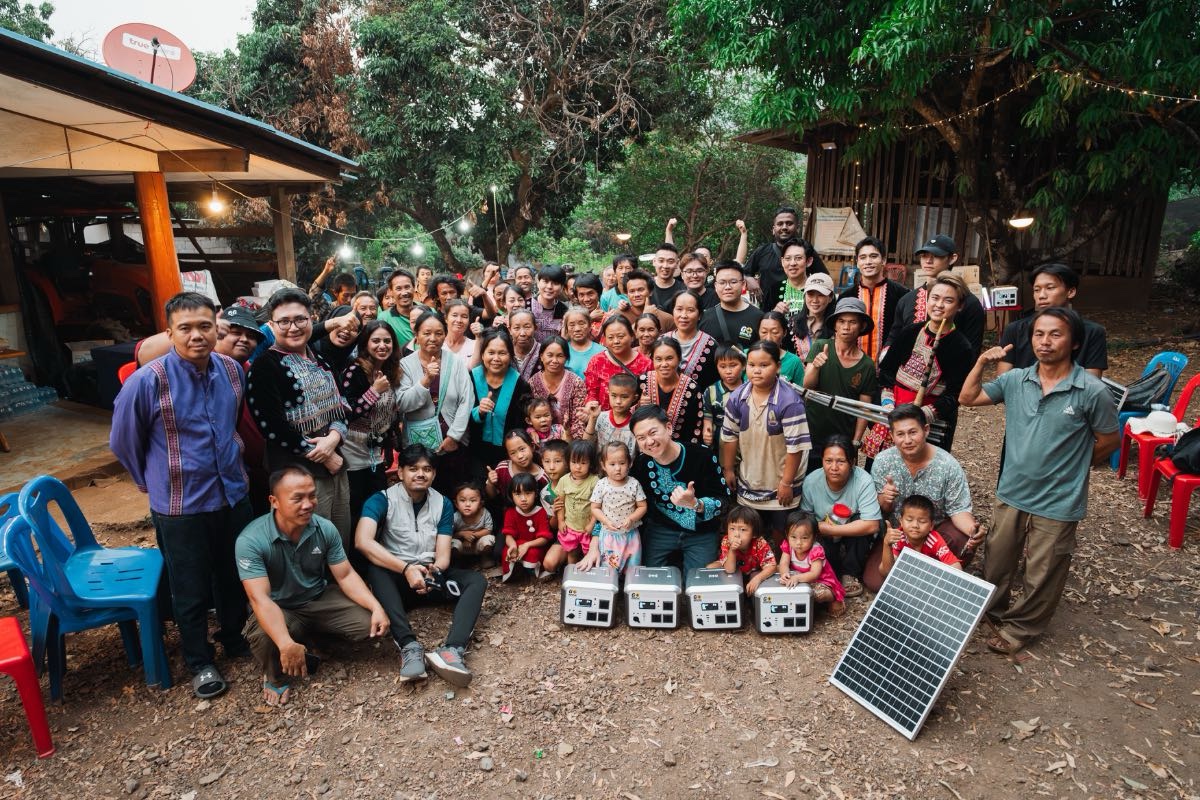
GoRental Global has deployed modular solar and battery systems in Huay Nam Rin Village, Chiang Mai, providing reliable off-grid electricity to all households in the community as part of its Energy Resilience Initiative.
40kW microgrid deployed to farming community 45km from Chiang Mai city
Huay Nam Rin Village, located about 45 kilometres from Chiang Mai city, is a small farming community spread across mountainous terrain where electricity access has historically been inconsistent. The deployment comprised 31 portable battery energy storage units and 60 solar panels, providing the village with 40kW of distributed renewable mobile microgrid capacity and 8kW of solar generation.
The system powers essential daily needs including lighting and mobile charging, replacing kerosene lamps and diesel-powered generators. Residents are also being trained to operate and maintain the system, building local technical capability alongside physical infrastructure.
GoRental projects that over a 10-year period, the system will supply 127,020kWh of renewable power to the village while avoiding more than 360 tonnes of carbon emissions. The company estimates the deployment could offset the equivalent of more than US$250,000 in diesel fuel and maintenance costs over the same period, with power costs potentially reduced by up to 60 per cent. On a per-household basis, each home could receive up to 4,380kWh of sustainable power over 10 years while avoiding approximately 12 tonnes of carbon emissions.

Initiative timed against rising fuel costs and energy security concerns in Thailand
The deployment comes as Thai authorities have adjusted diesel price controls and expanded fuel-related relief measures in response to higher global oil prices. GoRental said the project illustrates how modular microgrid systems can provide a practical alternative to oil-based power in off-grid settings where conventional infrastructure is absent or unreliable.
The initiative is part of GoRental’s #GoImpact platform, which applies the company’s commercial deployment model — originally developed for events and temporary infrastructure — to underserved communities. GoRental values its contribution to the village at approximately US$100,000.
“Reliable electricity changes more than a room after dark. It affects how families live, how children study, and whether a community feels it still has a future. If we already have technology that works, then the question becomes where else it should go. It should not stop at events or commercial sites. It should reach communities that have been waiting for something as basic as dependable power,” said Colin Peh, Founder and Managing Director of GoRental Global.
Chiang Mai deployment is a template for regional expansion
GoRental is positioning the project as a replicable, village-led model that can be documented and adapted for future deployments across Southeast Asia. The Chiang Mai initiative sits alongside the company’s self-sustaining micro home showcase at VidaCity in Singapore and a newly awarded microgrid project in Sarawak as part of a broader regional infrastructure play.
The International Energy Agency has reported that Southeast Asia’s electricity demand grew by more than 7 per cent in 2024, nearly double the global average, while clean energy accounts for close to half of total energy investment in the region.
GoRental Malaysia has already been established, with the company preparing to launch its Malaysia Experience Store in June 2026. The company is also pursuing a strategic partnership or memorandum of understanding with a Malaysian non-profit to support its #GoImpact rollout locally. Further expansion into Thailand and Cambodia is planned for the third quarter of 2026, followed by Indonesia in the fourth quarter.
“We see this as a starting point, not an endpoint. At a time when countries are being forced to think harder about oil exposure, fuel costs and energy reliability, we want to show that microgrid systems can be both practical and affordable,” Peh added.


Share your thoughts