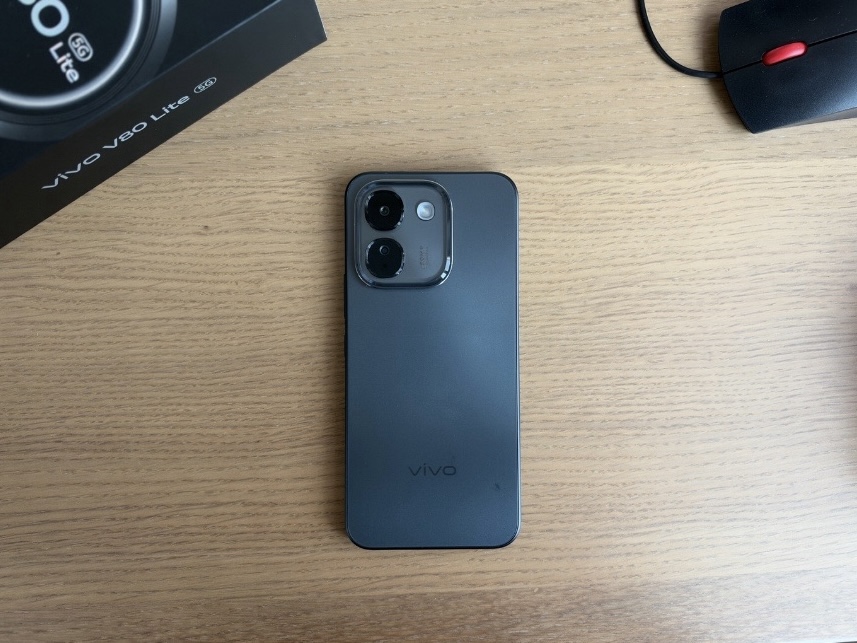

The Vivo V80 Lite looks and feels bigger than the usual mid-range phone, and the reason is the battery. At 10,000mAh, it is close to being a power bank in its own right. It runs on Android 16, 8GB RAM, 256 GB of storage and a 2.5GHz Dimensity 7300e Octa-core processor.
After some time with the phone, here is my review of what works, what doesn’t and who it suits.
Vivo V80 Lite battery life: the main draw
The 10,000mAh battery should comfortably last more than a day, possibly two, depending on how you use it. It uses Vivo’s fourth-generation silicon anode technology, and the company says it retains at least 80 per cent of its capacity after 1,400 full charge cycles, or up to seven years of use. For me, it’s just about two full days with some interactions with my GenAIs, doom-strolling and writing.
Vivo’s usage estimates include:
- About 33 per cent battery left after 12 hours of intensive use
- Up to 68 hours of phone calls on a full charge
- 30 hours of video playback and 30 hours of TikTok
- 14 hours of Mobile Legends: Bang Bang gaming
Reverse charging is also included, so the phone can top up other devices when needed.
Durability and display
The phone is rated IP68 and IP69 for water resistance, which Vivo says covers up to 24 hours. It has also passed five military-standard tests covering high and low temperatures, rain, sand and dust, and shock, and is said to survive a three-metre drop onto carpet. Obviously I didn’t accidentally do that. Or did I?
The screen is a 6.83-inch 1.5K OLED panel with up to 2,000 nits of brightness, a 409 PPI pixel density and a 120Hz refresh rate. In practice, that should keep maps and messages readable under bright sunlight. Vivo cites an AnTuTu score of up to 940,000, which should translate to responsive and stable everyday performance. The phone also has a 3,800mm vapour chamber for cooling during navigation, video and charging. I did feel it warmed up but not hot. Cooling systems like this are becoming common on phones, so it is good to see one here.
For those who hike or travel to remote areas, Vivo’s AI Super Link antenna design claims an 81 per cent boost in low-frequency signal.
Camera performance

The phone has a 50-megapixel main camera, a 2-megapixel bokeh camera and a 32-megapixel front camera. In the daytime, selfies come out fine, though there was some overexposure in the background, such as the window behind me. Normal daytime shots with the rear camera are sharp, but it looks like the software is doing much of the work. You can see more detail, although the sharpening is a bit heavy. At night, photos were a little noisy.
That is about what you would expect from a low to mid-range phone, and it is not a camera to compare with flagship devices. The 2x zoom is snappy and the shutter responds quickly in day time.


There is also a check-in watermark feature that stamps the time, date and location onto a photo, which is handy for remembering when and where a shot was taken.
AI features and software
The phone includes an AI eraser for removing unwanted objects from photos. My first attempt took several minutes with no result, and I stopped it. The second attempt worked, with a slight dust effect on screen. It did a decent job, though I think it would perform better in photos with stronger contrast between subject and background.
Other tools include Vivo’s own Office Kit for notes and to-dos that sync with a computer, support for Google Gemini Live, AI captions during calls, and AI writing tools to summarise, rewrite, expand, translate or tidy text. I found the call captions useful.
My review unit started up in Mandarin, and switching to English took a few tries before I found Singapore English in the settings. I also found the number of pop-ups a bit much. Many Chinese-brand phones do this, often to ask for data permissions, but fewer prompts would make the phone nicer to use.
What’s in the box
The box includes a charging brick, a USB-A to USB-C cable and a silicone case. A screen protector is already applied, so you can slip on the case and start using the phone straight away.
Price and who it is for
The Vivo V80 Lite 5G starts at S$499 and is available at major telcos. Buyers also get 100GB of Google One cloud storage on the standard plan for six months.
At that price, it is a decent phone, especially if you don’t need the extras that come with paying two or three times as much. I think it suits teenagers or older family members, such as parents and grandparents, who don’t need a high-performance device. For them, the long battery life and tough build matter more than a flagship camera.



Share your thoughts