

Jobs On Demand (Jod), Singapore’s pioneering multi-industry flexible gig work platform, has unveiled its first whitepaper titled “Empowering Flexibility: A Deep Dive into Singapore’s Gig Work Landscape with Jod.” The report sheds light on significant shifts within the gig economy, revealing an emerging trend towards hybrid operating models and increased compensation in traditionally non-gig sectors, particularly in healthcare and hospitality.
Growing Demand and Higher Earnings
The whitepaper, drawing on nine years of operational data and a survey of 1,000 gig workers in Singapore, highlights a remarkable rise in gig work, with applications for jobs on the Jod platform increasing by 50% month-on-month between April 2023 and December 2023. This surge is attributed to workers’ growing preference for flexible work arrangements, which now extend beyond traditional gig sectors to include healthcare and hospitality. In these sectors, workers are earning up to S$22 per hour, the highest hourly rates recorded, particularly in healthcare.
“Through this whitepaper, we aim to highlight emerging trends and key drivers in the gig work ecosystem, fostering a stronger and more resilient gig economy. It provides a comprehensive overview of sectoral performance and demand location insights, offering stakeholders a clear understanding of the opportunities and challenges within the gig economy. Our goal is to empower gig workers, equip policymakers with actionable data, and help businesses harness the potential of gig work to drive innovation and competitiveness. We remain committed to fostering a vibrant and inclusive gig work ecosystem in Singapore and beyond Southeast Asia,” commented Sebastian San, Singapore Country Manager of Jod.
Hybrid Work Models on the Rise
Contrary to traditional employment norms, the whitepaper reveals a shift towards hybrid work models, where workers are increasingly combining multiple gig roles or supplementing full-time jobs with gig work. According to the report, 20% of Jod members hold more than one job, with these individuals working over 40 hours per week on average. This hybrid approach reflects a broader trend of diversification in income streams, with more individuals seeking flexible work to maximize their earnings.
Industry-Leading Employers and Strategies for Success
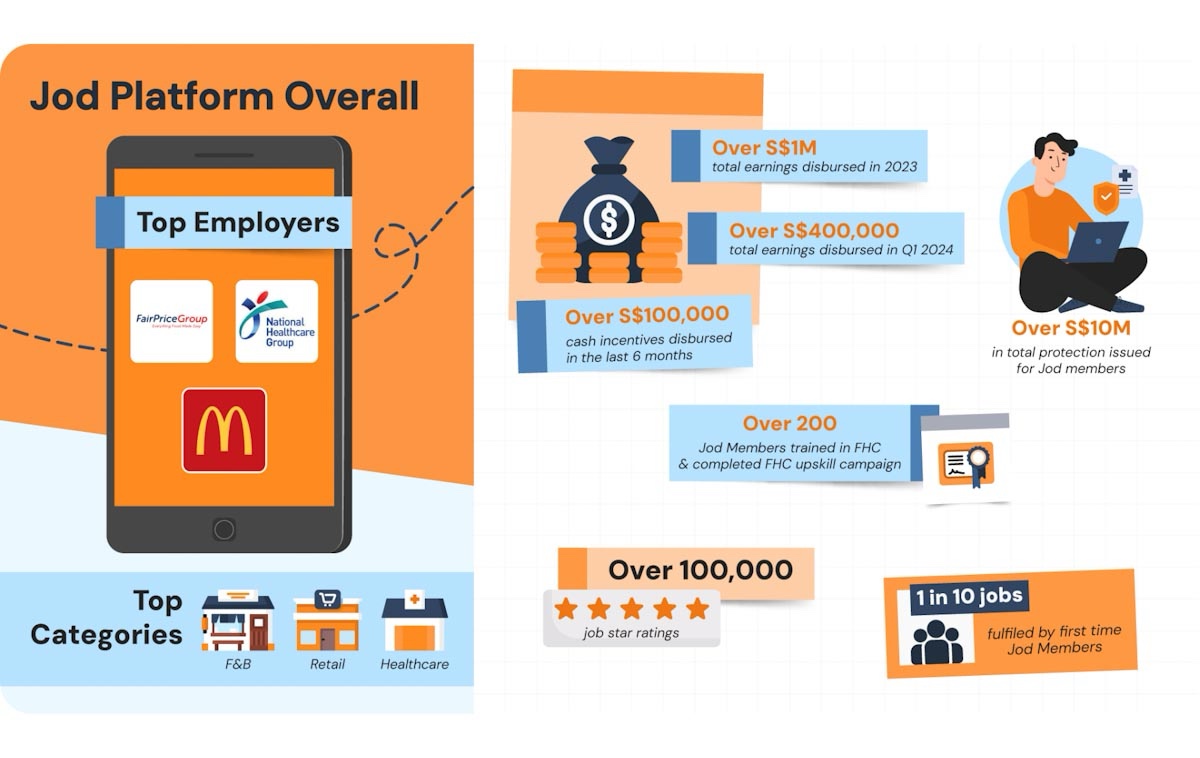
Top employers utilizing the Jod platform include Fairprice Group, National Healthcare Group, and McDonald’s. The whitepaper notes that one in ten jobs were filled by first-time Jod members, underlining the platform’s growing appeal and the increasing demand for gig work across diverse sectors.
To further support the gig economy, Jod has identified several strategies aimed at enhancing job satisfaction, retention, and employability among gig workers:
- Enhancing Gig Workers’ Job Satisfaction and Retention: Jod plans to foster a supportive ecosystem through a comprehensive rewards program that enhances gig workers’ financial well-being and job satisfaction, ultimately boosting retention rates.
- Upskilling and Certification: The platform is committed to bridging the skills gap by offering access to in-demand certifications, such as food handling, to improve employability and earning potential among gig workers.
- Streamlining Employer Operations: Jod is leveraging innovative technologies and AI to streamline the hiring process, improve communication, and enhance the overall job engagement experience for both employers and gig workers.
Since its inception in 2015, Jod has disbursed over S$8.5 million in earnings, with more than S$1 million disbursed in 2023 alone, including S$400,000 in the first quarter of 2024.


Share your thoughts