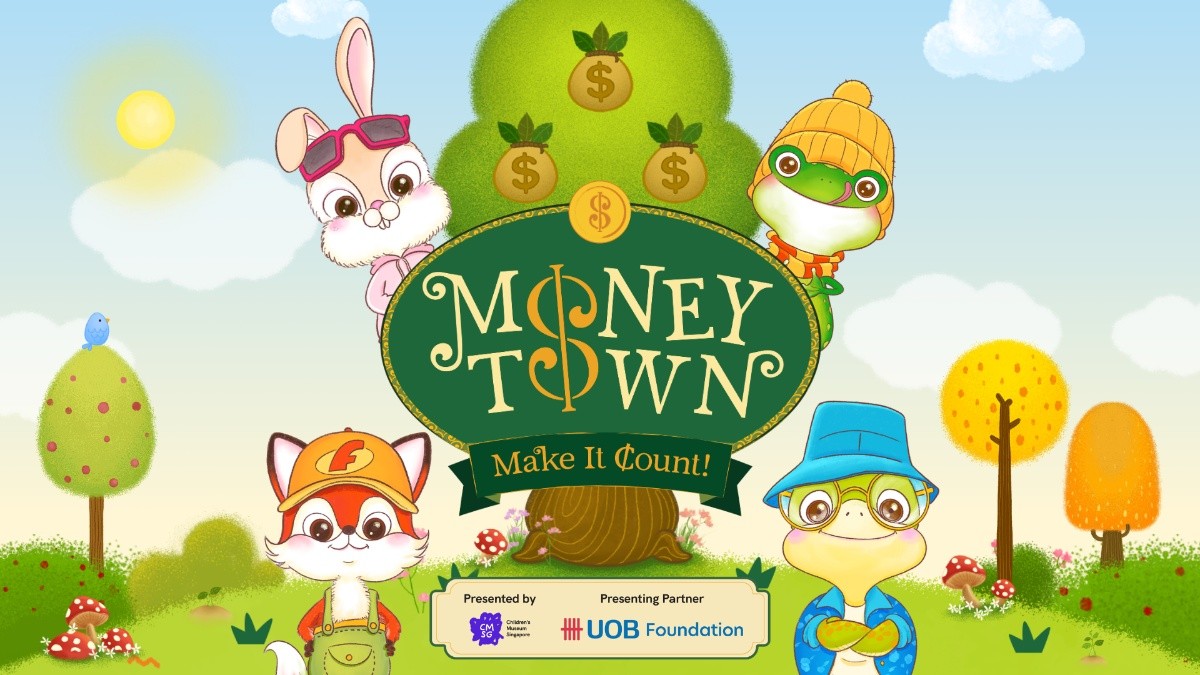



Children’s Museum Singapore (CMSG) will open Money Town: Make It Count! on 14 November 2026, a special exhibition that teaches financial literacy through play, with UOB Foundation as presenting partner. Children use RFID-enabled wristbands as digital wallets to earn, save, spend and donate as they move through the exhibition.
Key Takeaways
- Money Town: Make It Count! opens on 14 November 2026 and runs till January 2029, mainly for children aged five to nine.
- RFID wristbands act as each child’s wallet, tracking earning, saving, spending and donating decisions across the exhibition.
- A travelling version is planned for malls and public libraries from April 2027 to January 2029.
Financial literacy for children aged five to nine
The exhibition is designed mainly for children aged five to nine, with parents and caregivers taking an active role in the learning journey. A separate playspace, Money Barn, caters to children aged 48 months and below, with activities built around sorting, counting, matching and role-play.
The exhibition was developed through CMSG’s inaugural Curator Residency, in collaboration with FRida & freD, The Graz Children’s Museum in Austria. Children across age groups tested concepts through role play and activity stations during development, while educators, caregivers and community partners, including those supporting persons with special needs, shaped how financial ideas were presented.
UOB Foundation’s Chairman, Ms Janet Young, said: “Financial resilience starts with the habits and values we build from a young age.” The exhibition is part of the foundation’s focus on education and children.
How RFID wristbands power the exhibition
Each visitor receives a personalised RFID-enabled wristband on entry, which serves as their Money Town wallet and assigns them a random animal character avatar. Using the wristband, children earn, save, spend, donate and collect rewards, and can see how their decisions affect the resources available to them.
Caregivers can be paired with their child through the wristbands to earn digital bonus dollars at selected exhibits, creating opportunities to discuss choices and trade-offs in the moment. At the end of the visit, each child receives a take-home receipt and a printed badge recording their decisions, with an invitation to return and try a different approach.
Anti-scam challenges and money habits
Exhibition zones cover the history of money through bartering and gold panning, saving at a bank nursery, and basic ideas around investment through the “Pineapple Index”. A supermarket zone tackles needs versus wants and budgeting, with healthier-choice challenges developed with the Health Promotion Board.
The Back Alley zone features interactive anti-scam challenges that encourage children to identify risks, question suspicious claims and make informed choices online. Exhibits also explore forms of value beyond money, including health, time and sentimental attachment.
Asmah Alias, Director of Galleries, Exhibitions and Museums at HeritageSG, said children learn best “when they can see, do and talk things through”.
Learning beyond the museum visit
Pre- and post-visit guides developed with child therapists help families discuss money before and after the visit. Child Life Therapist Ms Tanuja Nair, who worked with CMSG on the guides, said the aim is to practise patience and decision-making with “reassurance and encouragement rather than pressure to get it right”.
Family and school programmes, community outreach, accessibility initiatives and digital resources will support children in revisiting budgeting, goal-setting, responsible spending and giving. A travelling version of the exhibition is planned for malls and public libraries from April 2027 to January 2029, and launch weekend programmes will run on 14 and 15 November 2026.