

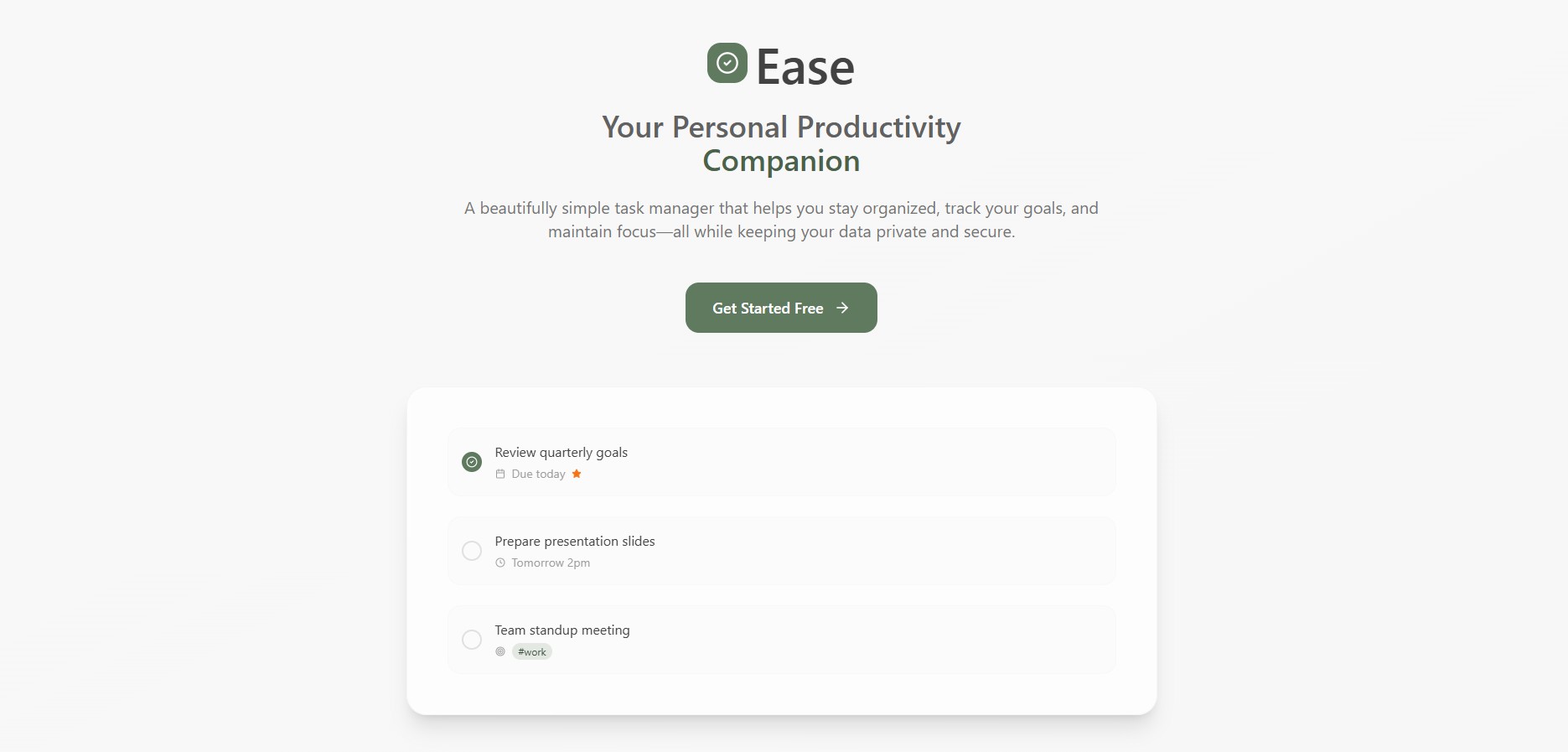
There are countless to-do list apps out there. So why burn my AI tokens to build yet another one?
Because vibe coding — building apps with AI copilots instead of traditional coding — lets me create what I need today, not wait months for someone else to ship features I’ll never use.
Why I Built Ease
My latest app is called Ease. It’s designed to give you a calm view of your tasks so your to-do list doesn’t trigger panic but focus. It even comes with built-in AI Insights that review your week and suggest how you can plan better.
The proof-of-concept went live on Sunday, 7 September. It took about one hour to deploy. But I only felt confident enough to launch it publicly today — after refining the experience.
Lessons From Building
A lot of people think building apps with AI is easy and instant. They’re not wrong — but purposeful features don’t appear by magic.
Take one example: in the early version of Ease, adding a task on mobile was clunky. You had to scroll up every time just to input something new. After thinking about how users would really behave, I rebuilt the flow. Now a “+” button sits within thumb’s reach. Tap it, and the keyboard instantly pops up, ready for your new task.
One small fix. But multiply that by dozens of tweaks, and suddenly you’re spending days or weeks fine-tuning an app that feels right. For me, that means waking up early before work, collaborating with my AI developer, and continuously improving Ease.
The Bigger Picture
Traditional app development is slow. Features take months. Bug fixes wait for deployment cycles. With vibe coding, fixes can take seconds.
That doesn’t mean developers are obsolete. In fact, their role is evolving. Security, scalability, architecture — those are areas AI can’t just “vibe” into existence. What vibe coding does is expand who can build, lowering the barrier to entry and speeding up iteration.
And here’s the kicker: UI/UX designers could become some of the most impactful vibe coders. They already understand user needs better than anyone, and with AI-assisted building, their ideas can move from Figma to functional app in record time. Pair that with frameworks like Google’s Stitch, and the gap between idea and execution shrinks even further.
Moving With the Times
Even now, some people dismiss vibe coding. But the technology isn’t the point. The point is possibility. If you can upskill and learn how to partner with AI in building, you’ll bring real value to the development process of the future.
Vibe coding is here to stay. And as more non-developers start experimenting, the way we think about “who builds apps” will fundamentally shift. Developers won’t disappear — but their focus will move to where human expertise matters most.
If you’re curious, I build on bolt.new. Here’s my referral link — let’s get free tokens together.


Share your thoughts