

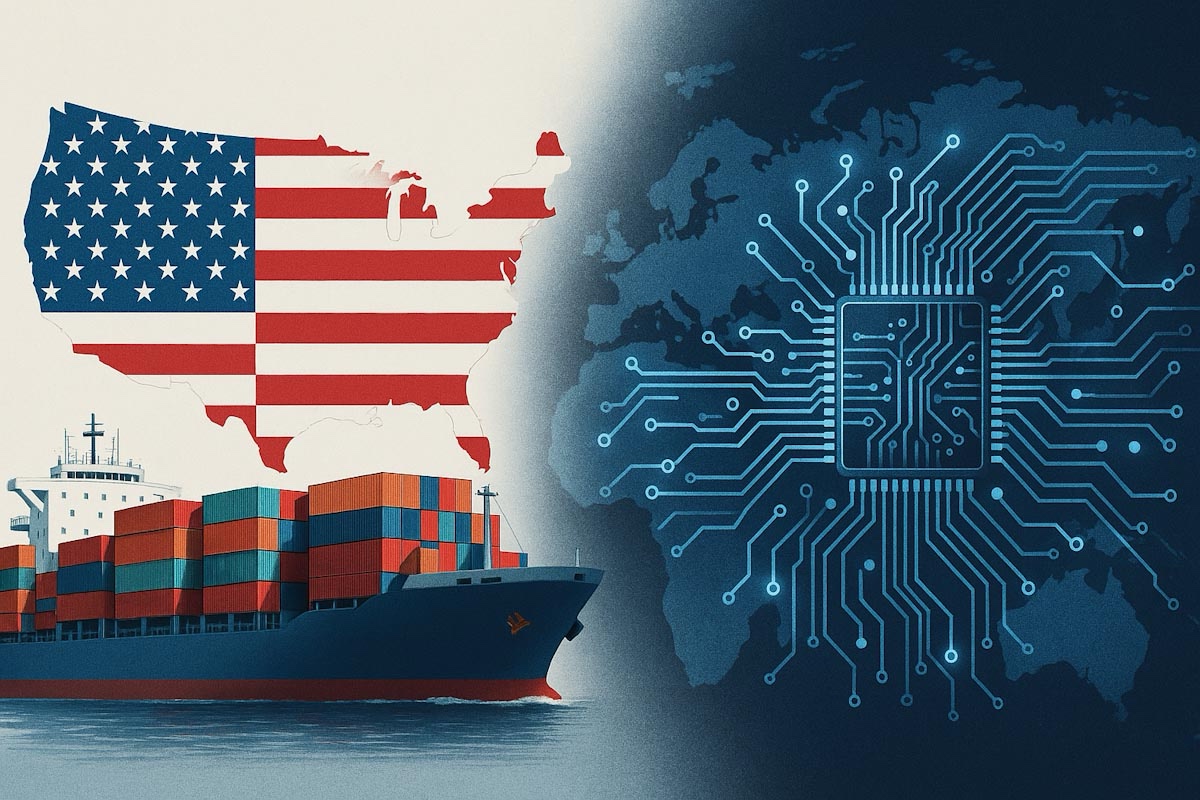
Tariffs, tariffs, tariffs. Earlier this year, U.S. President Donald Trump started imposing high tariffs on the U.S.’s neighbours, Canada and Mexico, and on Wednesday, 9 April 2025, he will expand them to almost all of the United States’ allies. This wiped out more than USD2 trillion from the stock market.
An industry that took one of the biggest hits was technology. To understand why, we first need to know what tariffs are.
What are tariffs?
A tariff is a tax – a tax paid by importers, meaning U.S. business owners who bring in goods from overseas.
Before tariffs, importers only had to pay:
- Base customs duties: Standard import taxes set by the U.S. government. If the product category is considered essential or part of a free trade agreement, these duties are usually very low – or even zero.
- Value-added tax (VAT) or Goods and Services Tax (GST): These are consumption taxes applied by the country receiving the goods, not the U.S. government. For importers, these taxes are usually reclaimable, but not immediately. That means cash flow takes a hit upfront, as the importer must pay the tax first and wait until the next tax filing cycle to get it back.
- Handling, inspection & documentation fees: Admin fees for things like logistics, customs clearance, and product testing.
After tariffs are imposed:
Importers must now pay an additional tariff percentage set by the U.S. government – depending on the country they are importing from and the product category.
Let’s take Singapore as an example.
As part of the Wednesday, 9 April 2025 tariff expansion, the U.S. imposed a 10% tariff on certain goods imported from Singapore. This means importers now pay 10% more on those goods.
What used to cost USD1,000 now costs USD1,100, reducing the importer’s profit margin. To maintain their margins, businesses often pass this cost to consumers, pushing up prices.
It’s generally tolerable if you are buying something you don’t need often, like a drone. But if tariffs hit daily consumables or essential tech products, it hits regular consumers hard because they compound.
Why do the U.S. tariffs hurt the technology industry more?
The whole world is connected. The global supply chain is connected. This means countries are dependent on one another.
Technology is no different.
Higher manufacturing costs overseas
U.S. tech companies heavily rely on countries like Vietnam, Taiwan, and China for manufacturing. Tariffs on these regions mean higher costs for goods.
The reason these companies manufacture overseas – especially in Asia – is simple: lower production costs. Tariffs make that strategy less attractive, because bringing the goods back to the U.S. now incurs a higher import cost.
You could argue that this might push companies to bring jobs back home – and that might happen – but it’s not guaranteed, due to how dependent tech production is on international suppliers.
Supply chain dependence
No country has all the resources they need in the world – especially not in technology, where critical parts are sourced from multiple regions.
Trump’s latest tariffs also target semiconductors, chips, and other essential tech components – even if they are just parts, not finished products. That creates a double whammy for U.S. companies. They pay more to import finished products, and also more for the components they need to build things domestically. So tech companies are stuck in a doom-doom situation.
Retaliatory measures
Many countries hit by U.S. tariffs are responding with their own tariffs on U.S. goods.
That makes American tech products more expensive overseas, reducing their competitiveness and hurting export revenue.
With all this happening, the market has grown volatile. Investors are taking a wait-and-see approach rather than risking capital in unstable conditions.
Case in point: When the tariffs were announced, the Magnificent Seven’s stocks lost about USD1.8 trillion. Apple alone lost USD311 billion in market value – and that was just the beginning.
No winners in this trade war

The U.S. tariffs affect everyone who’s part of the supply chain ecosystem – companies in the U.S. importing foreign goods, the countries exporting them, and even the government itself.
While the U.S. government collected US$70 billion in tariff revenue in 2019, this short-term win has long-term consequences. Everyday goods become more expensive, and consumers start to feel the pinch. When countries hit back, the costs ripple across industries – often leading to bailouts funded by taxpayers.
Tariffs also unnecessarily strain international relations. Right now, more than 180 countries are affected, and many are retaliating with tariffs on U.S. goods. This happens despite existing trade agreements, undermining trust and complicating future collaboration – not just in trade, but also in military cooperation and influence in international organisations.
The costs of tariffs are high – and they affect everyone, both tangibly and intangibly. As Singapore’s Deputy Prime Minister and Minister for Trade & Industry, Gan Kim Yong, rightly put:
“There are no winners.”


Share your thoughts