

A recent study conducted by Yahoo Singapore and Milieu Insight, surveying 1,500 users, sheds light on the complexities and nuances of digital adoption in the city-state, highlighting areas of enthusiasm as well as potential concerns within the community.
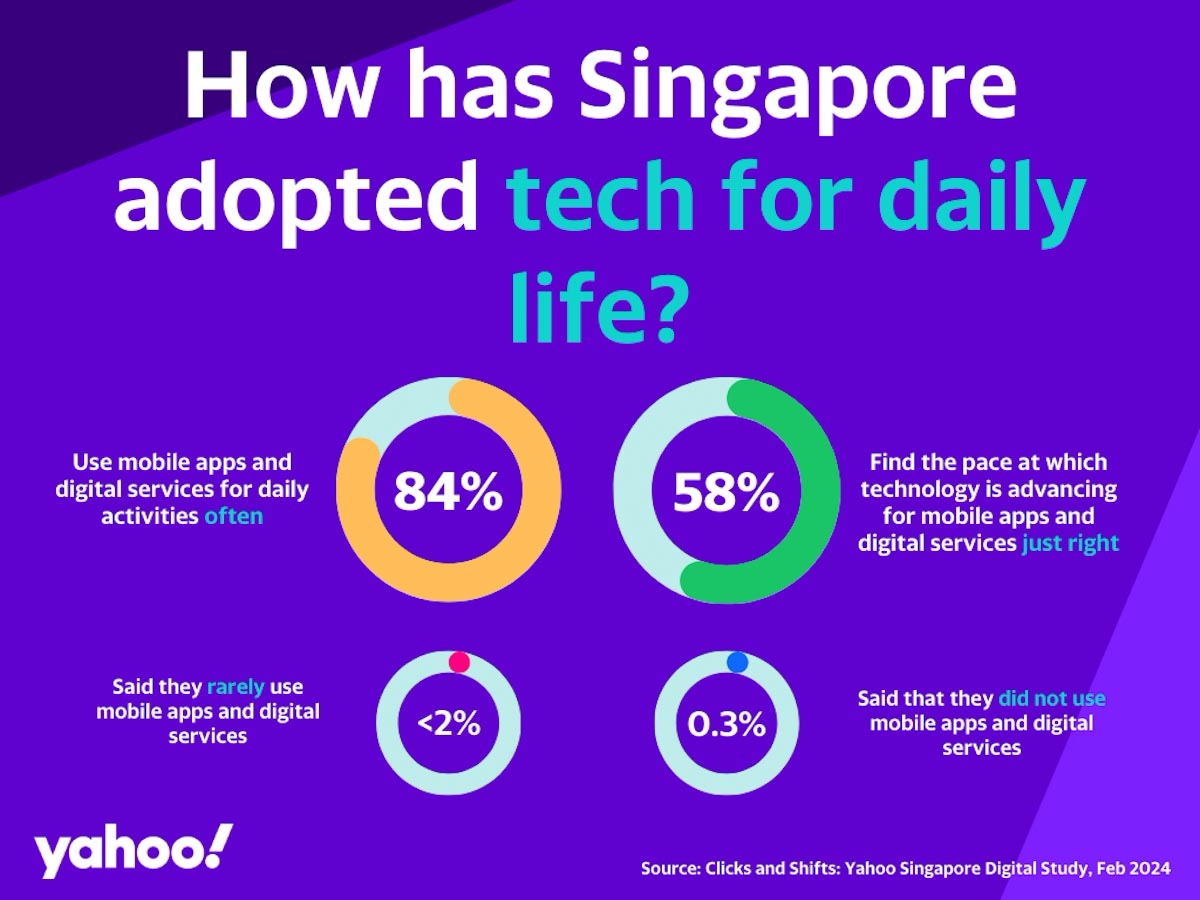
The findings highlights Singaporeans’ significant reliance on mobile apps and digital services for daily tasks, from making payments to navigating the urban sprawl. An overwhelming 84% of respondents reported frequent use of these digital tools, signifying a robust integration of technology in daily life. Additionally, 58% of participants feel that the rate of technological advancement is just right, aligning well with the nation’s ambition to be at the forefront of the smart city movement.
However, the study also reveals a society at a crossroads, with 32% undecided about the overarching benefits of this digital evolution. While 54% acknowledge an improvement in their quality of life thanks to these innovations, a significant portion of the population remains neutral or skeptical about the impact of technology on their day-to-day existence.


The Decline of Cash and the Rise of Digital Payments
In a striking testament to the city’s shift towards a cashless society, the study found that only a minority now prefers dealing in cash, with contactless and mobile payments taking the lead among preferred transaction methods. This preference becomes even more pronounced with increasing household income, indicating a potential correlation between economic status and digital payment adoption.
Ride-Hailing: A Reflection of Generational Preferences
The utilization of ride-hailing apps varies significantly across generations, with millennials leading in frequency of use, prioritizing comfort and travel time over cost. This contrasts with older generations, who still show a strong preference for traditional public transport methods, albeit with an increasing adoption of digital payment options.
When it comes to choosing digital services, Singaporeans prioritize user-friendly interfaces and stringent data protection. This concern for personal data security is particularly pronounced among older generations, who may feel more vulnerable to the risks associated with digitalization.
The Digital Divide: A Closer Look
The survey brings to light a digital divide influenced by socioeconomic factors, including household income and educational attainment. Individuals from lower-income households or with lesser educational qualifications tend to engage less frequently with digital services, suggesting a risk of marginalization in an increasingly digital world.
The findings from the Yahoo Singapore Digital Study paint a picture of a society navigating the challenges and opportunities presented by rapid technological advancement. While there’s a clear embrace of digital solutions across various aspects of life, concerns about privacy, the pace of change, and the risk of a growing digital divide highlight the need for a balanced approach to technology adoption. Ensuring equitable access and addressing the concerns of all societal segments will be crucial as Singapore continues to advance its vision of a smart, inclusive city.


Share your thoughts